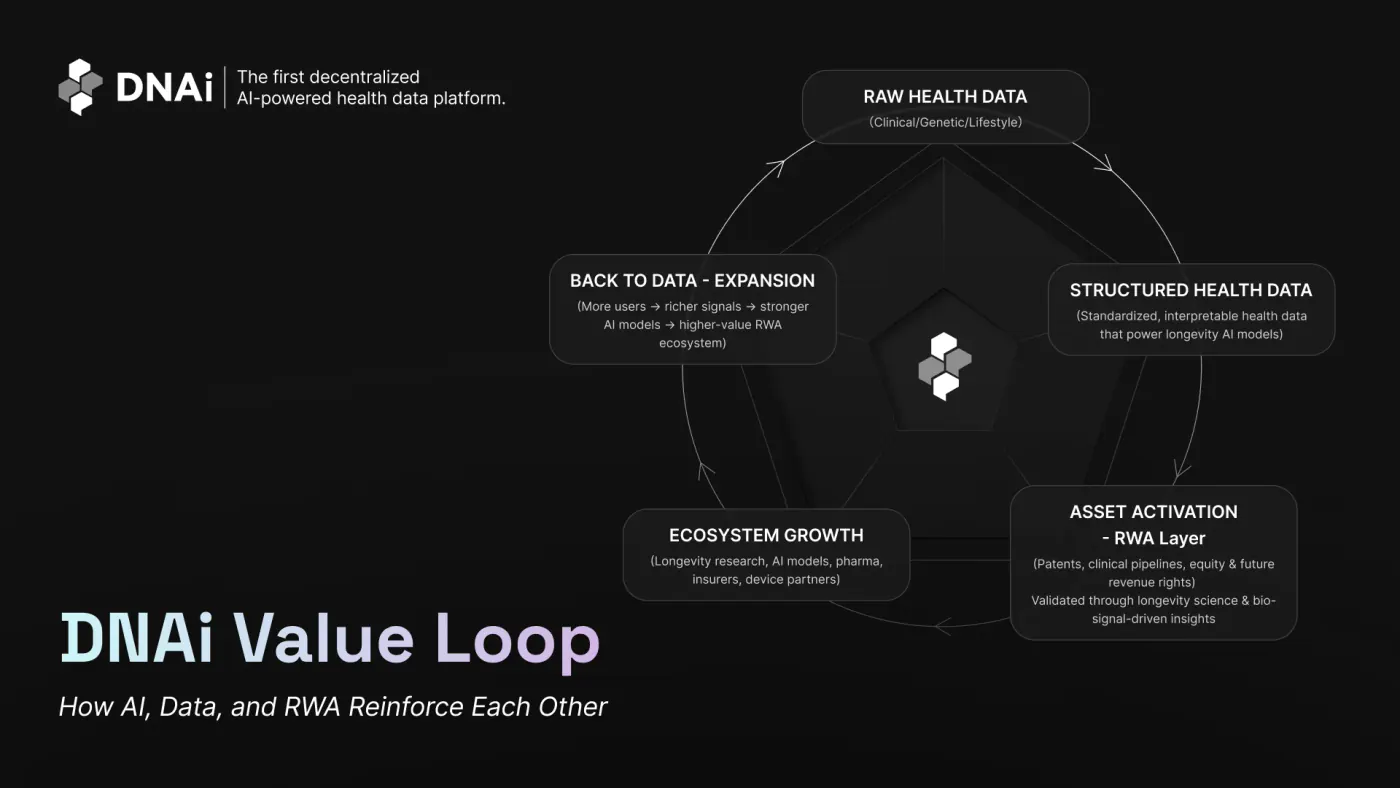
DNAi: Redefining Health Data with Decentralized AI
Brand Positioning: Empowerment Through Data Sovereignty — DNAi is the first decentralized AI-powered health data platform, redefining how health data is owned, used, and valued.
Unlike traditional centralized systems, DNAi places individuals in control — enabling them to securely manage their data, access personalized AI-driven insights, and engage in a user-centric ecosystem.
Architectural Design: Taming Health Data Complexity
Health data spans wearables, medical records, genomic reports, and more, creating a complex landscape for users. DNAi's architecture addresses this with modular, user-focused layers that emphasize clarity, actionability, and control:
Data Flow Hierarchy
Organized around Collect → Analyze → Act:
Data Collection: Smooth integration with wearables (Apple, Android, Oura, Fitbit, Xiaomi, etc.) and medical systems.
AI-Driven Analysis: Autonomous agents process multimodal data (time-series, genetic, behavioral) using NLP, computer vision, and predictive modeling.
Actionable Outcomes: Personalized health plans, research participation opportunities, and ecosystem rewards.
Visual Interface
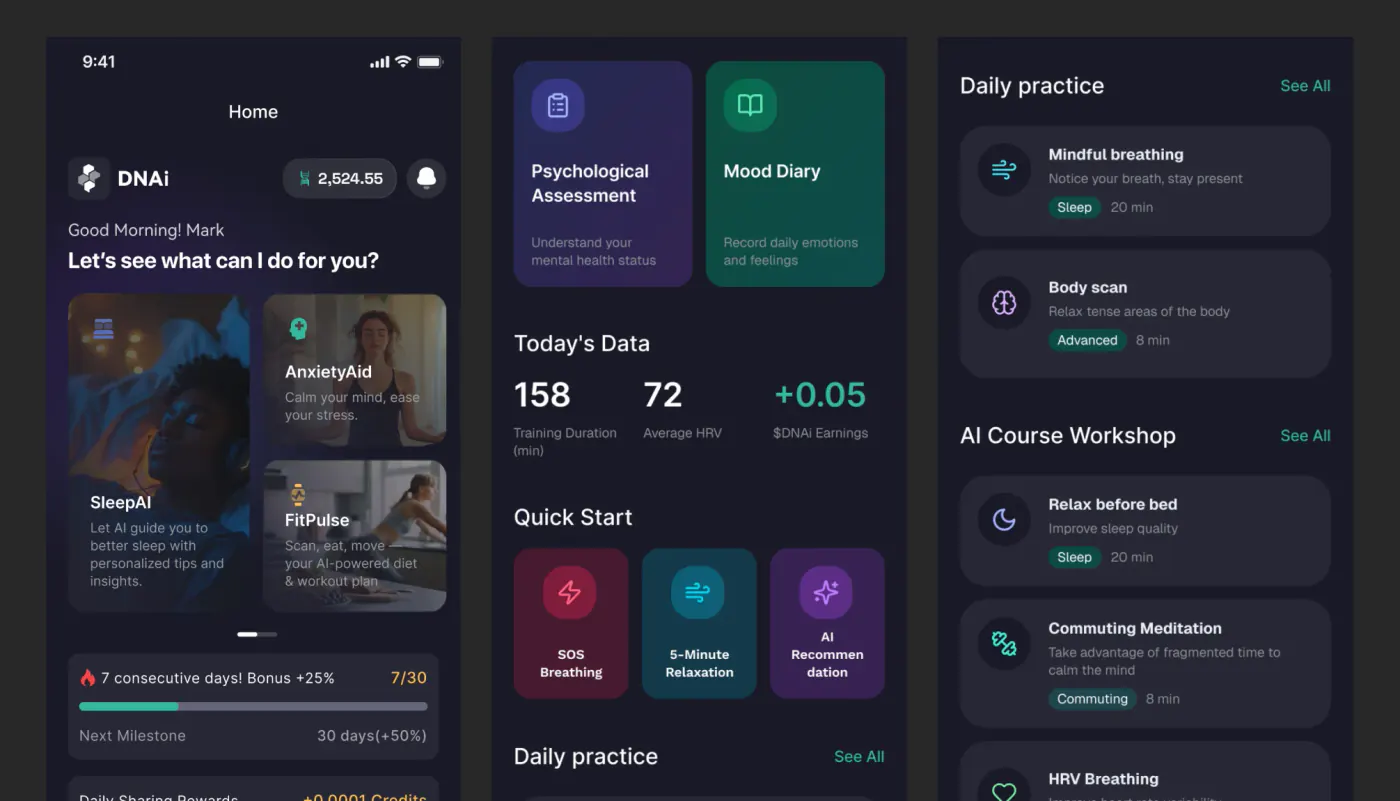
A dark-themed, tech-forward UI with neon accents (matching the blockchain/decentralization aesthetic) combines sophistication and accessibility. Modular components (dashboards, agent interfaces, wearable widgets) ensure information is grouped by task (not just features), lessening cognitive load.
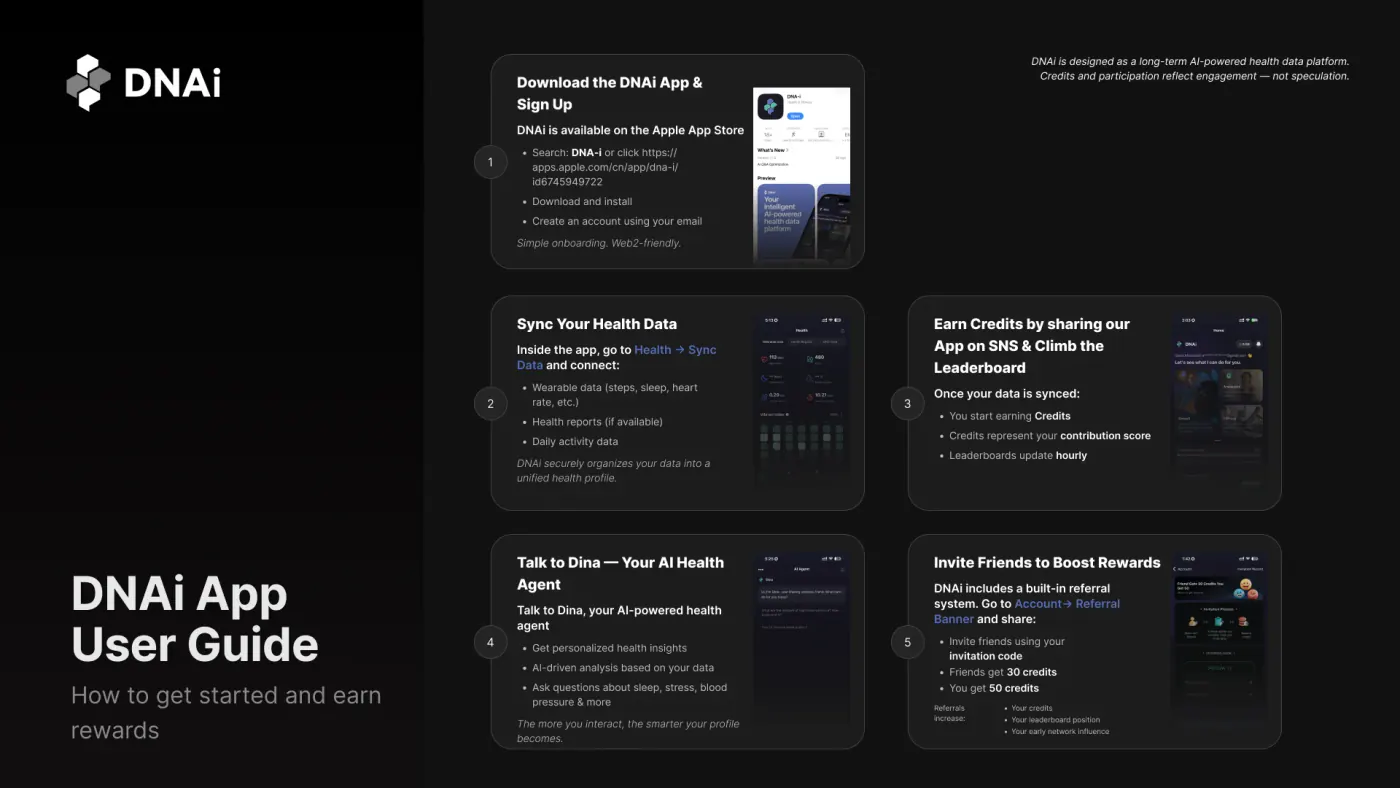
User Onboarding: From Doubt to "I Need This"
New users often struggle with trusting a new health platform and understanding its value. DNAi's onboarding reshapes the "Aha Moment" by presenting every step as a value exchange (what users gain versus what they share):
Value Clarity
First impression: "Take control of your health data — while AI unlocks insights you can't access alone." Demo: Demonstrate how wearables sync and AI generates a personalized health snapshot (such as sleep trends, genetic risks).
Value Expected
Avoid long setups. Guide users to their first success: A 2-minute AI health assessment (using demo or partially shared data). Highlight rewards (DNAi Credits) for early engagement, like uploading data or joining research.
Value Embedded
After onboarding, encourage daily habits: "Check your AI-generated sleep tips" or "Sync your Apple Watch for new insights." Integrate gamification (streaks, milestones) to strengthen long-term participation.
Core Capabilities: DNAi's Toolkit for Health Transformation
DNAi delivers value through six interwoven pillars that transform raw health data into actionable results:
AI-Powered Health Agent
Offers real-time, personalized analysis through natural language. Users can ask, "How does my sleep affect my heart health?" and receive a data-backed answer using connected wearable and genomic data.
Unified Health Data Dashboard
Provides a single interface for genomic reports, medical history, wearable metrics, and research participation status. There's no need to switch between multiple apps.
Wearable Device Integration
Natively supports Apple Watch, Android wearables, Oura, Fitbit, and Xiaomi. It syncs data instantly, and AI generates customized recommendations (for example, "Your Oura sleep score suggests a 10 PM bedtime for better recovery").
Privacy-Centric Architecture
Ensures end-to-end encryption, zero-knowledge proofs, and user-controlled access: Users decide who can view their data (from researchers to family caregivers). Compliance with GDPR/HIPAA builds trust.
Engagement & Insight Mechanisms
Streaks: Reward daily data uploads.
Milestones: Unlock exclusive research opportunities.
AI Feedback: Provide weekly summaries of health trends (such as "Your activity levels reduced stress by 20% this month").
Expanding Mini App Ecosystem
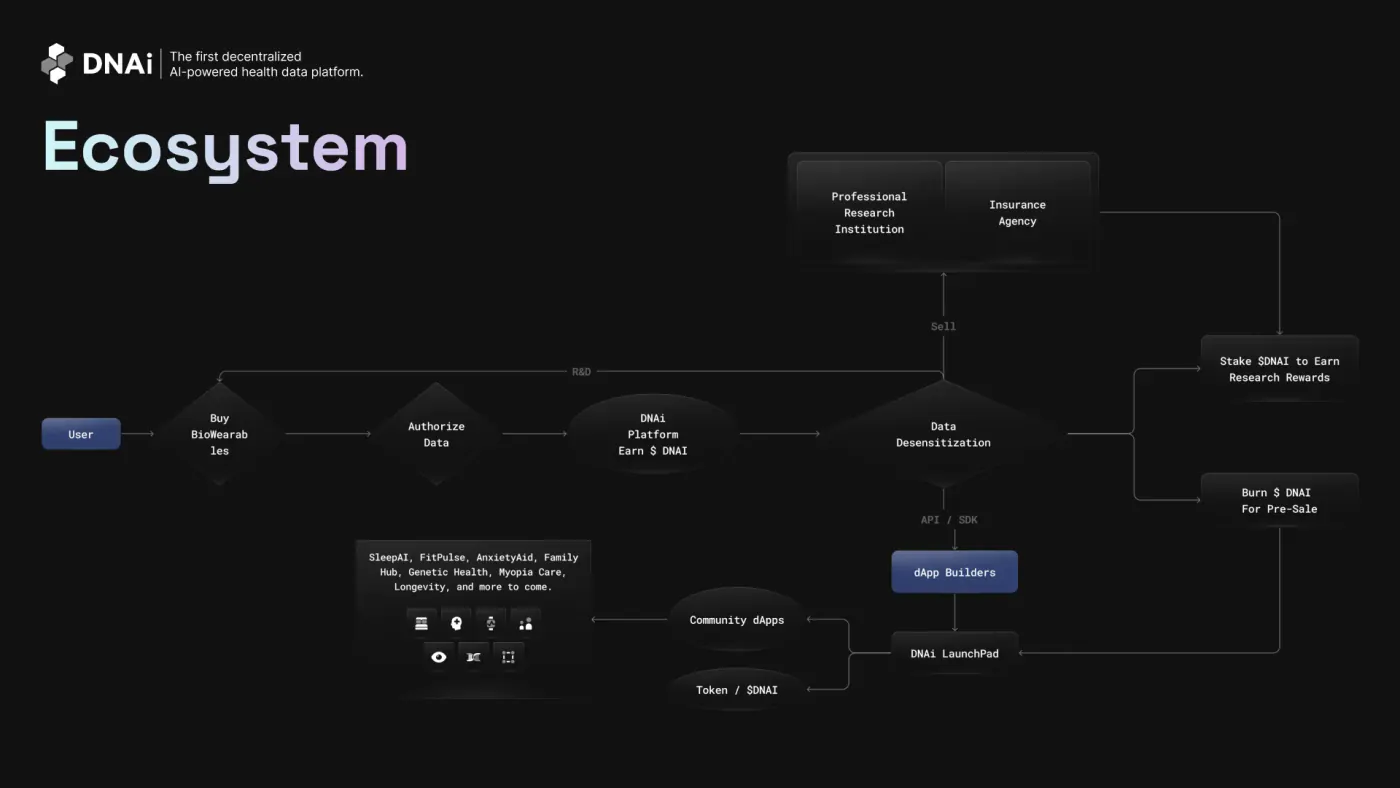
Features modular apps for specific health needs: SleepAI (optimized routines), AnxietyAid (stress-reduction tools), FitPulse (exercise optimization). Developers can use open APIs to create custom solutions.
Ecosystem: A User-First Health Economy
DNAi's ecosystem prospers on mutual value — users, institutions, and developers collaborate to create value:
Digital Assets
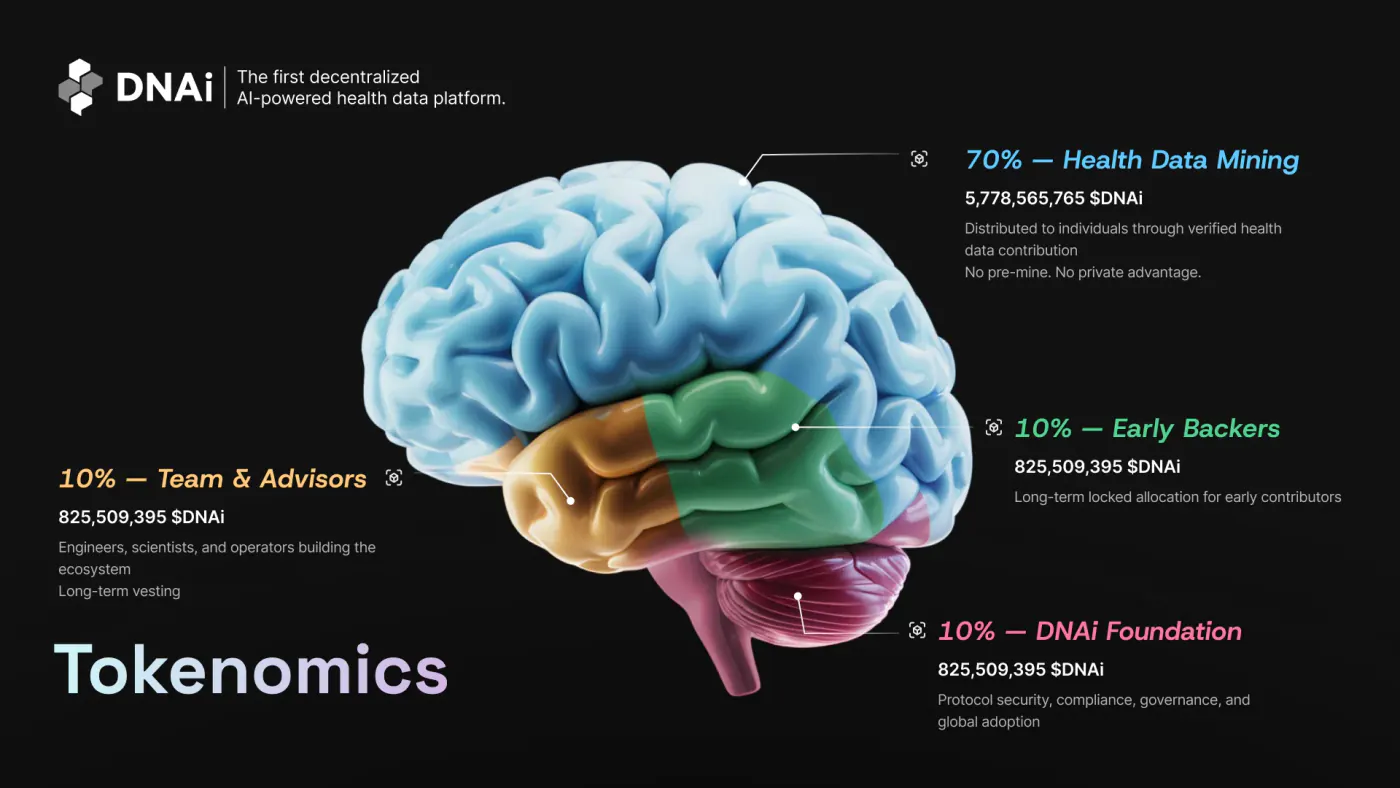
$DNAi Token: Used for platform governance (voting on updates) and value capture (staking, rewards).
DNAi Credits: Earned through engagement (data sharing, referrals) and spent on premium features, research access, or early app beta testing.
Developer & Institutional Partnerships
Open APIs allow healthcare providers to build custom AI tools, and researchers can access anonymized data for studies (with user consent).
Hardware Synergy: From Data to Action
DNAi doesn't just connect wearables — it enhances them with AI:
Apple Watch: AI turns heart rate variability into "stress resilience scores" and meditation prompts.
Oura Ring: Sleep data combined with genomic insights creates personalized circadian rhythm plans.
Fitbit: Activity tracking is integrated with AI-generated nutrition and diet recommendations.